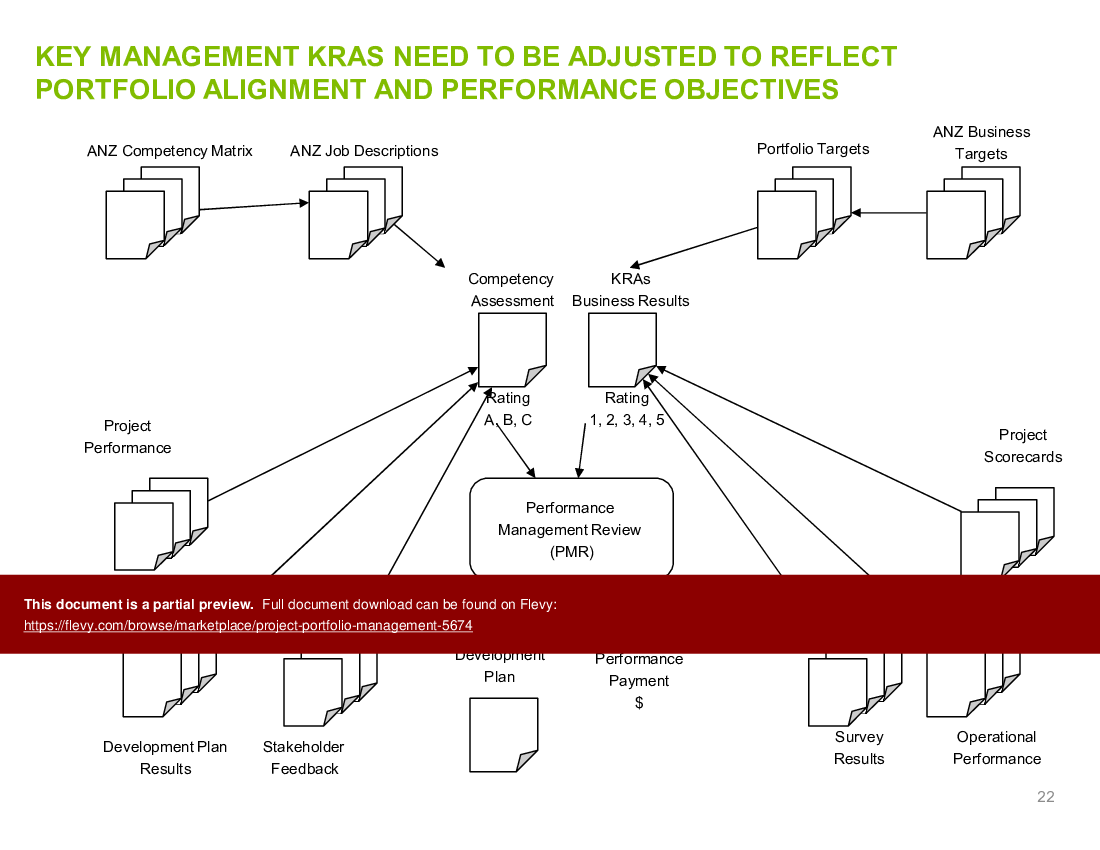
Provides a set of templates to rapidly launch such a capability
PROJECT MANAGEMENT PPT DESCRIPTION
Editor Summary
Project Portfolio Management is a 23-slide PowerPoint (PPTX) framework by Affinity Consulting Partners that presents a structured approach to optimizing project portfolios and aligning them with business and IT strategy, described as consulting-grade akin to McKinsey, Bain, or BCG-quality.
Read moreIncludes templates and tools such as a business case template, project portfolio table, progress update template, portfolio overview reports, standardized 1-pager, and an evaluation criteria framework. Target users include corporate executives, IT leaders, project managers, and business analysts. Sold as a digital download on Flevy.
Use this deck when an organization needs to align project investments and resource allocation with strategic objectives—typical triggers include strategic planning, post-merger integration, or recurring portfolio reviews.
Corporate executives conducting strategic planning sessions that align new and existing projects to business strategy using a portfolio evaluation matrix.
IT leaders balancing technology investment decisions and managing resource contention across competing projects with centralized funding oversight.
Project managers prioritizing project proposals and tracking active work with standardized progress update templates and approval gates.
Business analysts preparing portfolio overview reports and post-implementation benefits reviews.
The structured sequence of planning, prioritization, approval, monitoring, and benefits realization mirrors consultant-style portfolio frameworks used at McKinsey, Bain, and BCG.
Project Portfolio Management (PPM) represents the centralized management of processes, methods, and technologies employed by project managers and project management offices (PMOs) to analyze and collectively oversee current or proposed projects based on a multitude of key characteristics. The fundamental objectives of PPM revolve around determining the optimal resource mix for project delivery and scheduling activities in a manner that best aligns with an organization's operational and financial goals, while adhering to constraints imposed by customers, strategic objectives, or external real-world factors. The International standard serves as the defining framework for Project Portfolio Management.
Within this meticulously crafted deck, we shift our focus towards the essential capabilities required in large-scale program/project-driven organizations to effectively manage the critical elements of time, resources, skills, and budgets indispensable for accomplishing all interrelated tasks. Furthermore, this comprehensive resource furnishes a structured framework for issue resolution and risk mitigation, elevating the centralized visibility essential for planning and scheduling teams to identify the most expeditious, cost-effective, or otherwise suitable approaches for successful project and program deliveries.
As a testament to its practicality, this material further provides a set of meticulously designed templates, meticulously crafted to expedite the establishment of a robust PPM capability. If your organization aspires to unlock the potential of streamlined project portfolio management, this document is an indispensable investment that promises to revolutionize your approach to program and project oversight.
In the world of high-stakes project-driven organizations, the mastery of PPM capabilities can make the difference between mere survival and enduring success. Embrace the knowledge and insights encapsulated within this deck, and equip your organization to navigate the complexities of project management with unrivaled precision and foresight. Seize this opportunity to revolutionize your project portfolio management approach and propel your organization towards unparalleled heights of achievement. Secure your copy today and unlock the gateway to PPM excellence.
This presentation outlines a formal portfolio management process that aligns project funding with strategic business objectives and IT direction. It includes a comprehensive set of tools for tracking project performance, managing resources, and ensuring alignment with long-term strategic goals.
Got a question about the product? Email us at support@flevy.com or ask the author directly by using the "Ask the Author a Question" form. If you cannot view the preview above this document description, go here to view the large preview instead.
MARCUS OVERVIEW
This synopsis was written by Marcus [?] based on the analysis of the full 23-slide presentation.
Executive Summary
The Project Portfolio Management (PPM) presentation offers a structured approach to optimizing project portfolios, aligning them with business and IT strategic objectives. This consulting-grade PowerPoint template, akin to McKinsey, Bain, or BCG-quality, provides executives and project managers with essential frameworks, processes, and best practices for effective portfolio management. Buyers will learn to enhance resource allocation, prioritize projects, and ensure alignment with long-term strategic goals, ultimately driving better business outcomes.
Who This Is For and When to Use
• Corporate executives overseeing project portfolios and strategic alignment
• IT leaders managing technology investments and project delivery
• Project managers responsible for prioritizing and tracking project outcomes
• Business analysts focused on aligning projects with business objectives
Best-fit moments to use this deck:
• During strategic planning sessions to align project portfolios with business goals
• For quarterly reviews of project performance and prioritization
• In workshops aimed at improving resource allocation and project funding processes
Learning Objectives
• Define the key components of effective project portfolio management
• Build a structured approach to portfolio prioritization and funding
• Establish a framework for aligning projects with strategic business objectives
• Identify best practices for monitoring and reporting project performance
• Develop insights into financial impacts and resource constraints
• Create a standardized process for project approval and benefits realization
Table of Contents
• Introduction to Portfolio Management (page 2)
• Challenges in Current Portfolio Processes (page 3)
• Proven Best Practices in Portfolio Management (page 4)
• Differences Between Project Office and Portfolio Management (page 5)
• Benefits of a Best Practices Portfolio Process (page 6)
• Key Components of a Best Practices Portfolio Management Approach (page 7)
• Planning Steps in Portfolio Management (page 8)
• Prioritization Steps in Portfolio Management (page 9)
• Approval Process in Portfolio Management (page 10)
• Monitoring and Forecasting in Portfolio Management (page 11)
• Benefits Realization Steps (page 12)
• Key Evaluation Criteria for Project Portfolio (page 13)
• Centralized Funding Under Portfolio Management Committee (page 15)
• Standardized Reporting Tools for Portfolio Management (page 21)
Primary Topics Covered
• Portfolio Management Process - A structured approach to managing project portfolios that aligns with business and IT strategies.
• Best Practices - Proven methods for optimizing project funding, resource allocation, and prioritization to enhance project value.
• Project Approval Process - A standardized framework for evaluating business cases against strategic fit, financial viability, and risk.
• Monitoring and Reporting - Techniques for tracking project progress, financial performance, and benefits realization.
• Resource Contention Management - Strategies for identifying and resolving resource conflicts across the project portfolio.
• Benefits Realization - A systematic approach to ensuring that projects deliver expected outcomes and value post-implementation.
Deliverables, Templates, and Tools
• Business case template for project funding approval
• Project portfolio table for prioritizing and reviewing projects
• Progress update template for active projects between phase gates
• Portfolio overview reports for management decision-making
• Standardized project "1-pager" for capturing volatile portfolio data
• Evaluation criteria framework for assessing project viability
Slide Highlights
• Overview of the portfolio management process and its alignment with demand management
• Visual representation of best practices and their corresponding benefits
• Comparison of project management office functions versus portfolio management functions
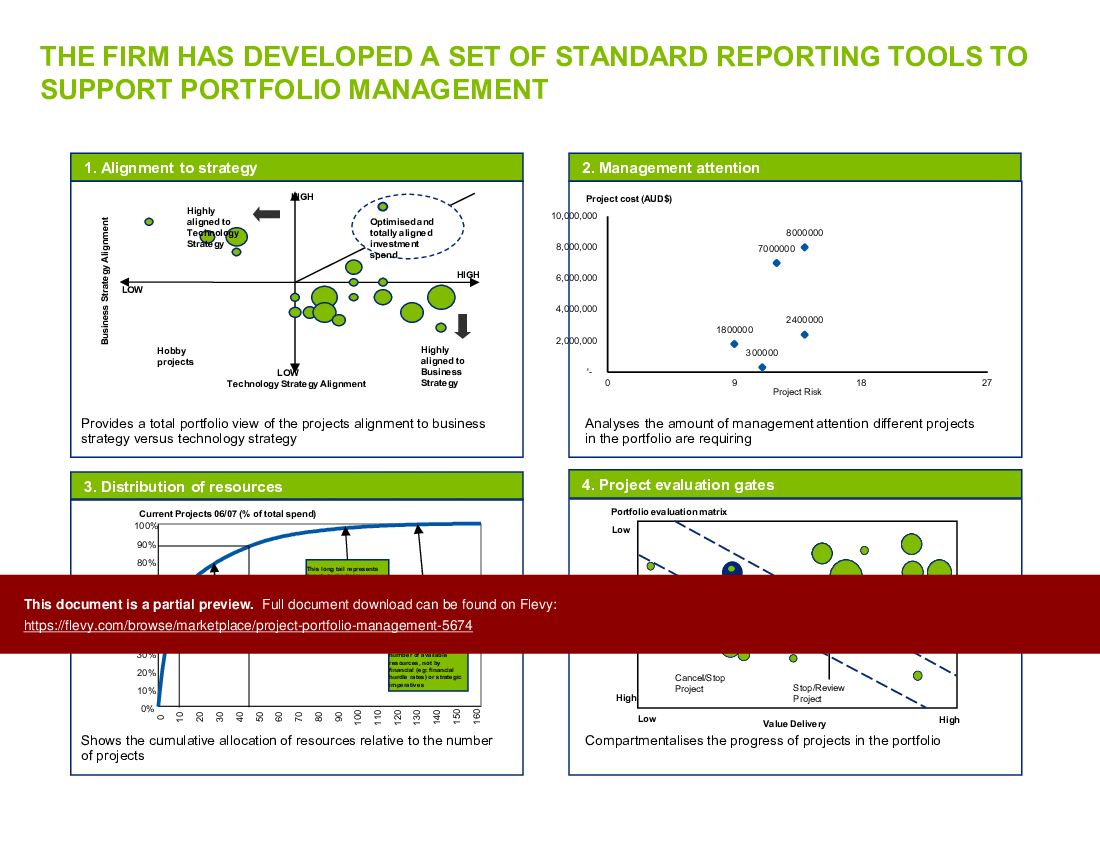
• Portfolio evaluation matrix illustrating project alignment with business and technology strategies
• Standardized reporting tools that facilitate effective portfolio oversight
Potential Workshop Agenda
Portfolio Management Overview Session (60 minutes)
• Introduce the portfolio management framework and its importance
• Discuss current challenges and best practices in portfolio management
• Review key components of the portfolio approval process
Project Prioritization Workshop (90 minutes)
• Engage participants in evaluating project proposals against strategic criteria
• Facilitate discussions on resource contention and alignment with business objectives
• Develop a prioritized project list based on group input
Benefits Realization Review (60 minutes)
• Analyze completed projects against original business cases
• Discuss lessons learned and implications for future projects
• Establish ongoing tracking mechanisms for benefits realization
Customization Guidance
• Tailor project evaluation criteria to reflect specific organizational goals and strategic priorities
• Adjust reporting templates to align with internal communication standards and stakeholder needs
• Update funding approval processes to incorporate organizational governance requirements
Secondary Topics Covered
• Challenges in aligning IT investments with business objectives
• Importance of centralized project funding and oversight
• Strategies for managing project scope changes and their impacts
• Techniques for enhancing visibility into project risks and resource allocations
• Methods for ensuring continuous alignment of projects with strategic intent
Topic FAQ
What are the core components of a project portfolio management approach?
Core components include structured planning, prioritization, an approval process, monitoring and forecasting, and benefits realization. These elements collectively enable alignment of projects with business and IT strategy and provide governance for funding decisions, as outlined in the portfolio management process and the benefits realization steps.
How can organizations manage resource contention across multiple projects?
Organizations can identify and resolve resource conflicts through centralized oversight, standardized reporting, and explicit resource contention management strategies. The material highlights the role of centralized funding and a portfolio management committee to prioritize resource allocation, for example using centralized funding under a portfolio management committee.
What does an effective project approval process typically evaluate?
An effective approval process evaluates project business cases against strategic fit, financial viability, risk, and urgency. It uses standardized documentation and decision points such as approval gates and a business case template to ensure consistent evaluation and funding decisions, including the use of an evaluation criteria framework.
How should benefits realization be tracked after project completion?
Benefits realization is tracked by comparing actual outcomes to the original business case and maintaining ongoing tracking mechanisms. The deck recommends structured benefits tracking and review sessions to assess lessons learned and continuous improvement, supported by portfolio overview reports and benefits realization steps.
What should I look for when buying a PPM PowerPoint template for executive use?
Look for a slide set that includes governance frameworks, decision criteria, and ready-to-use templates for executive reporting—specifically business case templates, a project portfolio table, progress update templates, and portfolio overview reports. Flevy's Project Portfolio Management package exemplifies this with a 23-slide PPTX that includes those templates.
How much time should I set aside to run a project prioritization workshop?
Use defined agendas to scope the session; the provided workshop agenda suggests a 90-minute project prioritization workshop to engage stakeholders, evaluate proposals against strategic criteria, discuss resource contention, and produce a prioritized project list, with facilitation focused on the evaluation criteria framework.
After a merger, which PPM steps should we prioritize first to realign projects?
Prioritize assessing strategic fit of ongoing projects, applying a consistent evaluation criteria framework, and establishing centralized funding and reporting to resolve resource conflicts. Immediate actions include project evaluation using the evaluation criteria framework and instituting centralized funding under a portfolio management committee.
How often should project performance be reviewed and what reporting tools are recommended?
Regular reviews—typically monthly—help ensure ongoing alignment and timely adjustments. Recommended reporting tools include standardized portfolio overview reports, a concise project 1-pager for volatile portfolio data, and progress update templates to support monthly monitoring and forecasting.
Document FAQ
These are questions addressed within this presentation.
What is the primary goal of project portfolio management?
The primary goal is to optimize project selection and resource allocation to align with business and IT strategic objectives, ensuring maximum value delivery.
How does portfolio management differ from project management?
Portfolio management focuses on aligning multiple projects with strategic goals, while project management concentrates on the execution and delivery of individual projects.
What are the key components of a best practices portfolio management approach?
Key components include structured planning, prioritization, approval processes, monitoring, and benefits realization.
How can organizations ensure alignment of projects with strategic objectives?
By establishing a formal portfolio management process that includes regular assessments of project alignment with business goals and strategic fit.
What tools can support effective portfolio management?
Standardized templates for business cases, progress updates, and portfolio overview reports can enhance visibility and decision-making.
How often should project performance be reviewed?
Regular reviews, typically on a monthly basis, help ensure that projects remain aligned with strategic objectives and allow for timely adjustments.
What criteria should be used for project prioritization?
Criteria may include strategic fit, financial viability, urgency, value delivery, and risk assessment.
How can organizations track benefits realization post-project completion?
Implementing a structured benefits tracking process that reviews project outcomes against original business cases ensures accountability and continuous improvement.
Glossary
• Portfolio Management - The centralized management of one or more project portfolios to achieve strategic objectives.
• Project Portfolio - A collection of projects and programs grouped together to facilitate effective management and alignment with strategic goals.
• Business Case - A document that outlines the justification for a project, including costs, benefits, risks, and alignment with strategic objectives.
• Benefits Realization - The process of ensuring that a project delivers its intended benefits and value after completion.
• Resource Contention - Conflicts arising from limited resources being allocated to multiple projects simultaneously.
• Approval Gates - Defined points in the project lifecycle where funding and project continuation are evaluated and approved.
• Strategic Fit - The degree to which a project aligns with the organization’s strategic objectives and priorities.
• Risk Assessment - The process of identifying and evaluating potential risks that could impact project success.
• Monitoring and Reporting - Ongoing activities to track project progress, performance, and alignment with objectives.
• Prioritization - The process of ranking projects based on their importance and alignment with strategic goals.
• Standardized Reporting - Consistent formats and processes for reporting project status and performance metrics.
• Stakeholder Engagement - The process of involving relevant parties in project decision-making and communication.
• Opportunity Window - The timeframe within which a project must be executed to realize its intended benefits.
• Project Evaluation Matrix - A tool used to assess and compare projects based on defined criteria.
• Financial Viability - The assessment of a project’s potential to generate financial returns relative to its costs.
• Change Management - The process of managing the transition and implementation of new initiatives within an organization.
• Project Lifecycle - The series of phases a project goes through from initiation to completion.
• Portfolio Overview Reports - Summarized documents that provide insights into the overall status and performance of the project portfolio.
• 1-Pager - A concise document summarizing key information about a project, including status, risks, and alignment with strategic goals.
• Project Sponsor - An individual or group who provides resources and support for a project and is accountable for its success.
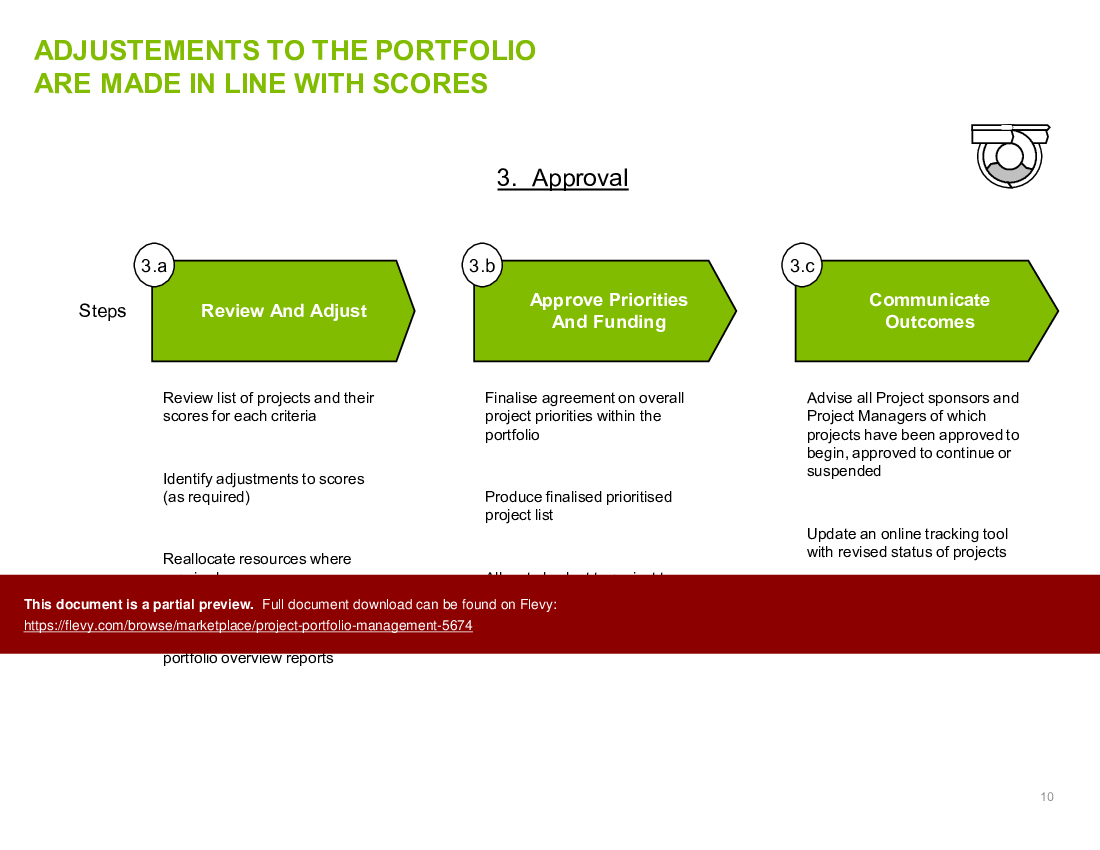
This PPT slide outlines a structured approach to project portfolio management, focusing on the approval process through 3 main steps. The first step, "Review and Adjust," involves evaluating project scores against established criteria and reallocating resources to align projects with strategic priorities, resulting in an updated project list and portfolio overview. The second step, "Approve Priorities and Funding," finalizes project priorities and budget allocation, ensuring resources are directed to projects ready to proceed. The final step, "Communicate Outcomes," emphasizes transparency by informing stakeholders about project approvals and updates through an online tracking tool, enhancing ongoing oversight and accountability. This framework improves decision-making and resource allocation within organizations.
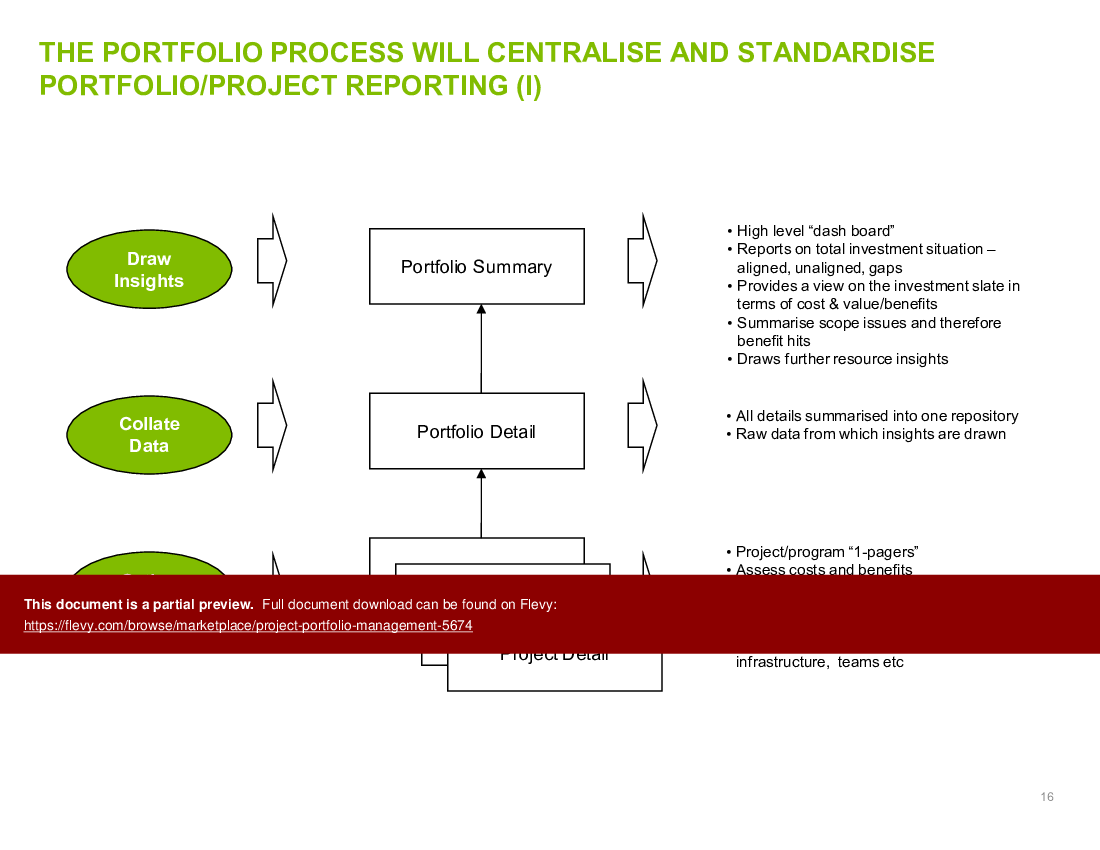
This PPT slide outlines a structured approach to project portfolio management, focusing on centralized and standardized reporting through 3 components: Draw Insights, Collate Data, and Gather Data. These components feed into 2 key sections—Portfolio Summary and Portfolio Detail. The Portfolio Summary acts as a high-level dashboard, highlighting investment alignment issues and gaps, while the Portfolio Detail consolidates project specifics into a single repository, emphasizing the importance of raw data for actionable insights. It includes project "one-pagers" assessing costs and benefits. The periodic update process, termed "active ensure," is conducted monthly to maintain alignment with architectural standards and assess scope changes' impacts on assets and team structures, ensuring effective resource management and project tracking.
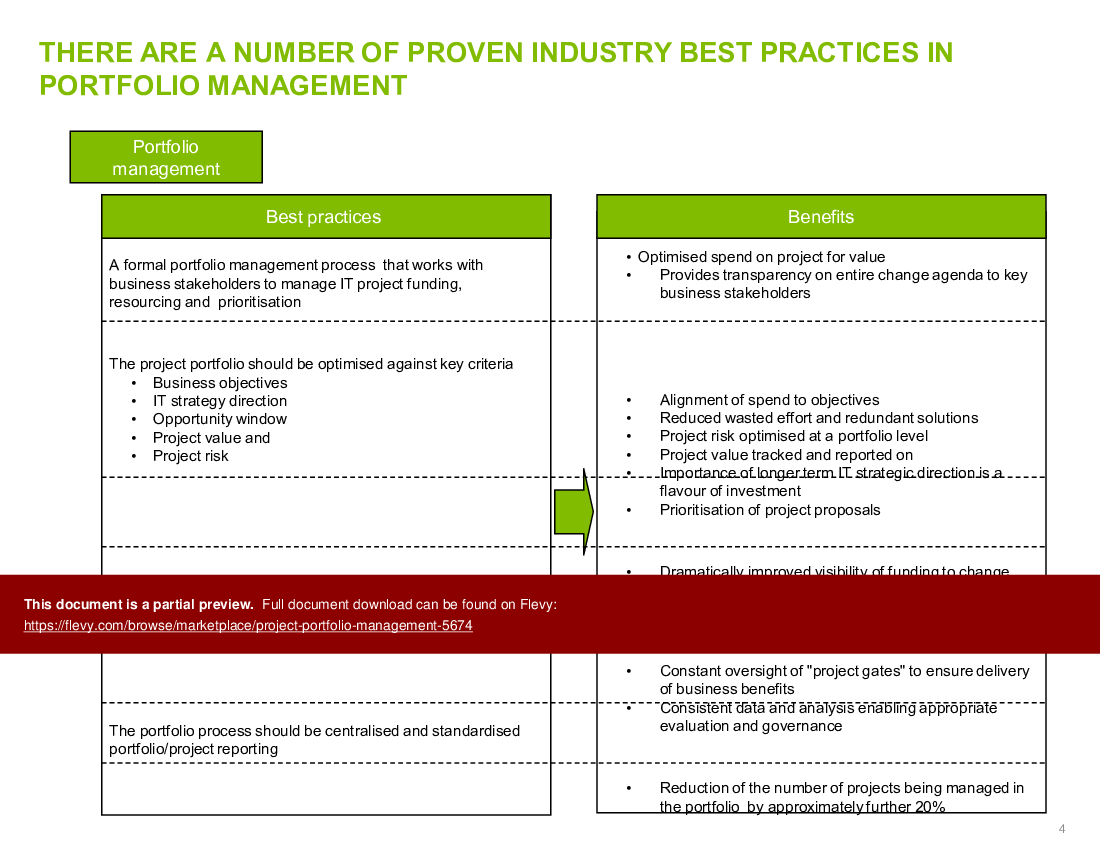
This PPT slide outlines best practices in portfolio management for IT project funding and prioritization. A formal portfolio management process is essential for collaborating with business stakeholders, managing resources effectively, and aligning projects with organizational goals. Key criteria for optimizing the project portfolio include business objectives, IT strategy direction, opportunity windows, project value, and project risk, serving as a framework for funding decisions. Centralizing project portfolio funding under a dedicated management committee streamlines decision-making and enhances accountability. Benefits include optimized project spending, improved stakeholder transparency, and alignment of expenditures with strategic objectives, ultimately leading to better governance and evaluation processes. Long-term IT strategic direction is critical for prioritizing projects that align with overarching goals.
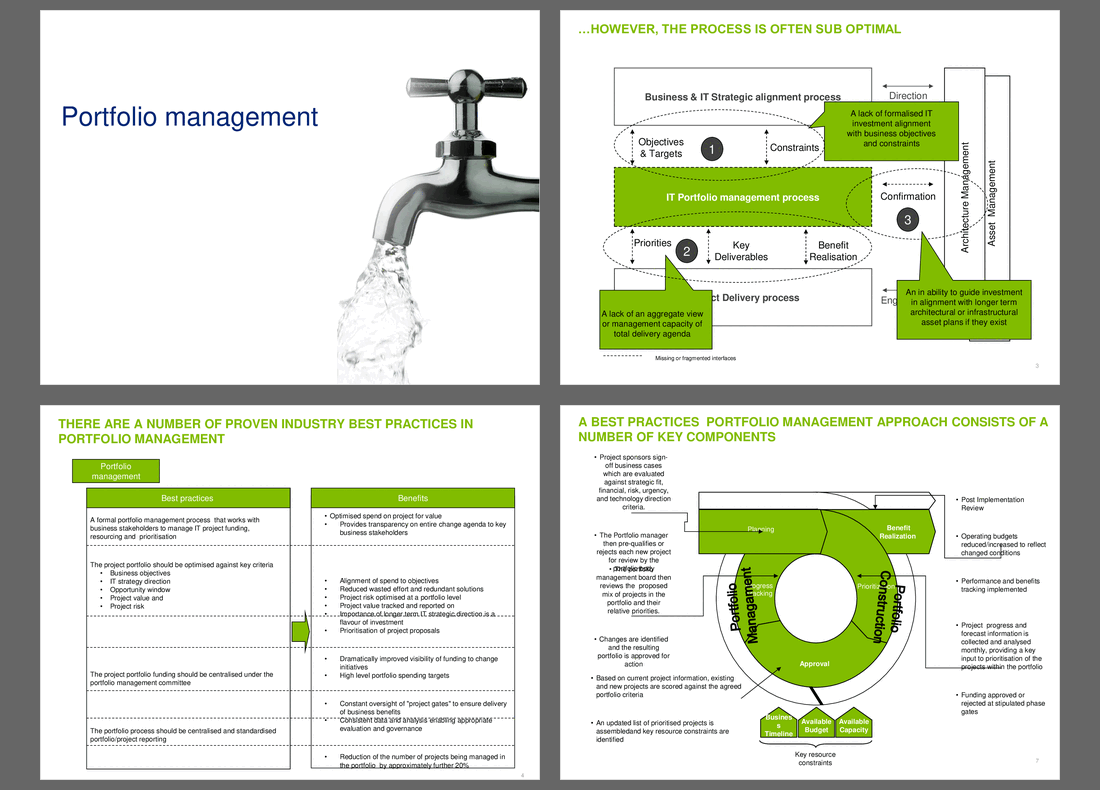
This PPT slide outlines critical components of IT portfolio management, emphasizing alignment with business and IT strategic objectives. It presents a framework for business and IT strategic alignment, highlighting the need for clearly defined objectives and constraints affecting decision-making. The IT portfolio management process is depicted as a dynamic system integrating priorities and key deliverables, yet often lacks formalized alignment with business goals, leading to inefficiencies. The project delivery process reveals a gap in aggregate management capacity for the total delivery agenda, hindering effective IT resource management. The confirmation phase stresses ongoing validation of alignment between IT initiatives and business strategies. Architecture and asset management are essential for guiding investments according to long-term infrastructural plans, underscoring the need to refine IT portfolio management processes for better strategic alignment and effectiveness.
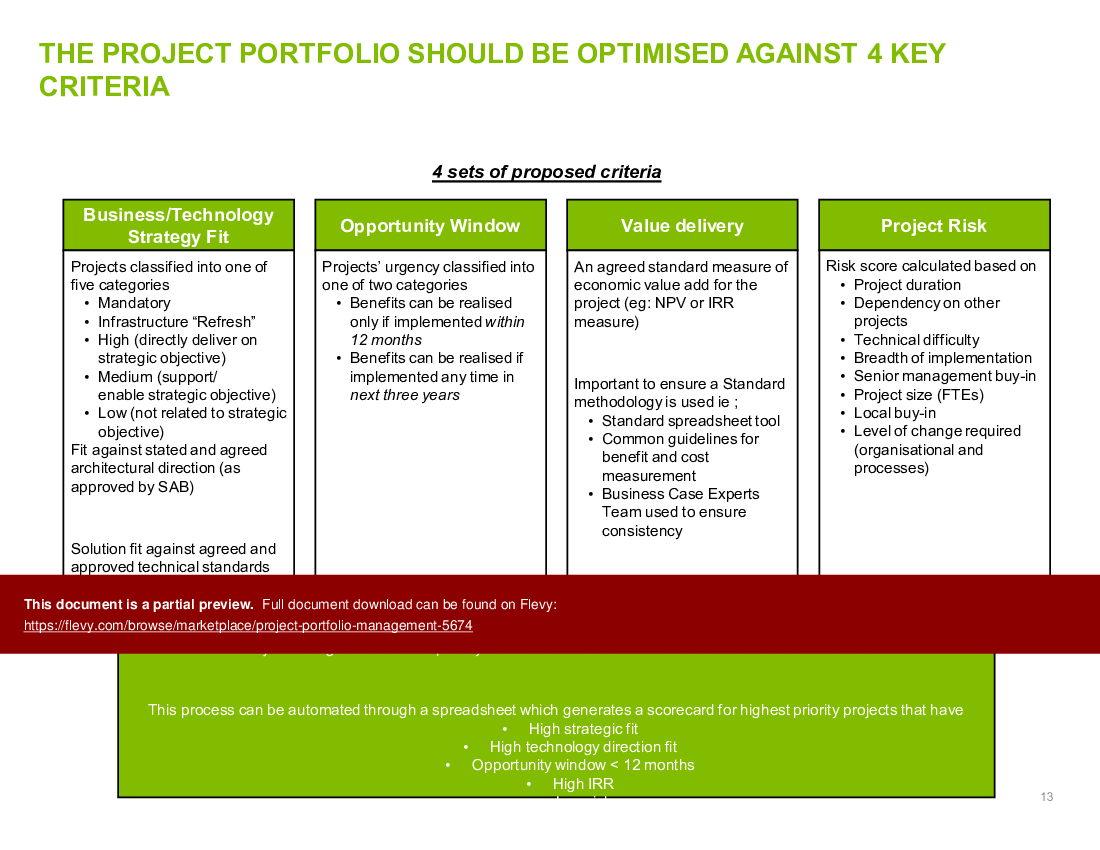
This PPT slide outlines a framework for optimizing project portfolios based on 4 critical criteria. The first criterion, Business/Technology Strategy Fit, classifies projects into Mandatory, Infrastructure “Refresh,” High, Medium, and Low categories to prioritize alignment with strategic objectives. The second criterion, Opportunity Window, assesses project urgency, distinguishing between those delivering benefits within 12 months and those within 3 years. Value Delivery, the third criterion, establishes a standardized economic value measure using methodologies like NPV or IRR, supported by a Business Case Experts Team for consistency. Lastly, Project Risk evaluates potential risks, including duration, dependencies, and technical challenges, by calculating a risk score to inform project execution decisions. Together, these criteria enhance project portfolio management and strategic alignment.
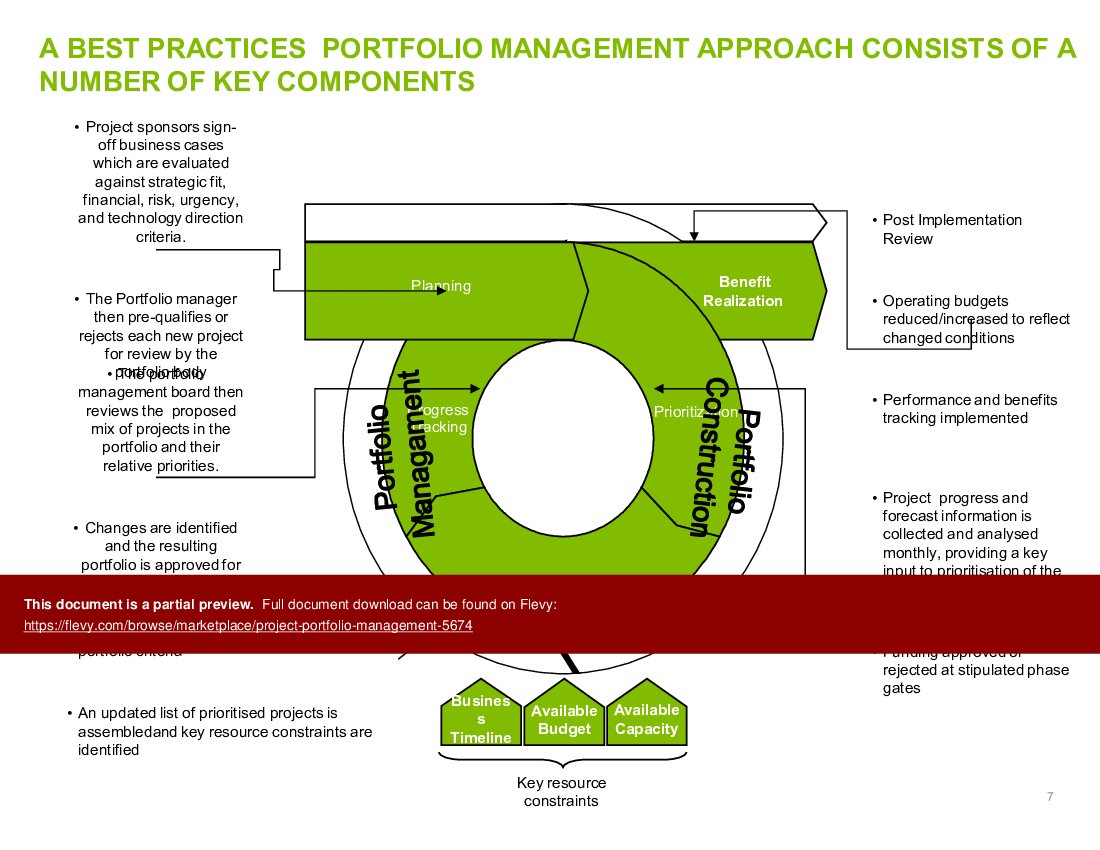
This PPT slide outlines a structured approach to project portfolio management, highlighting key components for effective execution. Project sponsors sign off on business cases evaluated against criteria such as strategic fit, financial implications, risk assessment, urgency, and alignment with technology direction. The portfolio manager pre-qualifies or rejects projects for a management board that assesses project mix and priorities, ensuring efficient resource allocation. A cyclical process of planning, construction, approval, and benefit realization maintains alignment with organizational goals. Ongoing assessment identifies changes in the project landscape, allowing for real-time portfolio adjustments based on performance tracking. Funding decisions occur at specific phase gates, ensuring financial backing for projects meeting predefined criteria, optimizing resource allocation and enhancing project selection.
Source: Best Practices in Project Management PowerPoint Slides: Project Portfolio Management PowerPoint (PPTX) Presentation Slide Deck, Affinity Consulting Partners
The Affinity Consulting Partnership is a global powerhouse of experienced consultants, specializing in technology and digital-driven change.
Our team is comprised of individuals across the globe who have extensive expertise and a proven track record in guiding large corporations across the globe through complex business transformations. Our partners were all at some stage senior consulting
... [read more] professionals at tier 1 global consulting firms over half our staff have been equity partners in the past at these firms.
With a combined experience of over 120 years, our partners bring a wealth of knowledge and insights to the table. Each member of our team has a distinguished background, having served as a top-level executive and trusted advisor to the C-suite of major corporations. Our partners have honed their skills and expertise through years of hands-on experience, leading successful consulting engagements across a wide range of industries, including finance, healthcare, retail, manufacturing, and more.
Our partners have a keen eye for identifying emerging trends and disruptions in the business landscape and are adept at developing innovative strategies to help our clients stay ahead of the curve.

As a team, we are dedicated to driving meaningful results for our clients, helping them navigate the complexities of technology and digital-driven change, and unlocking new opportunities for growth and success. Our partners are trusted advisors and thought leaders in the industry, and we are committed to providing exceptional service and creating lasting partnerships with our clients.

Since 2012, we have provided business templates to over 10,000 businesses and organizations of all sizes, from startups and small businesses to the Fortune 100, in over 130 countries.
"As a consultant requiring up to date and professional material that will be of value and use to my clients, I find Flevy a very reliable resource.
The variety and quality of material available through Flevy offers a very useful and commanding source for information. Using Flevy saves me time, enhances my expertise and ends up being a good decision."
– Dennis Gershowitz, Principal at DG Associates
"One of the great discoveries that I have made for my business is the Flevy library of training materials.
As a Lean Transformation Expert, I am always making presentations to clients on a variety of topics: Training, Transformation, Total Productive Maintenance, Culture, Coaching, Tools, Leadership Behavior, etc. Flevy
It is well worth the money to purchase these presentations. Sure, I have the knowledge and information to make my point. It is another thing to create a presentation that captures what I want to say. Flevy has saved me countless hours of preparation time that is much better spent with implementation that will actually save money for my clients.
"
– Ed Kemmerling, Senior Lean Transformation Expert at PMG
"Flevy is now a part of my business routine. I visit Flevy at least 3 times each month.
Flevy has become my preferred learning source, because what it provides is practical, current, and useful in this era where the business world is being rewritten.
many challenges and there is the need to make the right decisions in a short time, with so much scattered information, we are fortunate to have Flevy. Flevy investigates, selects, and puts at our disposal the best of the best to help us be successful in our work.
"
– Omar Hernán Montes Parra, CEO at Quantum SFE
"[Flevy] produces some great work that has been/continues to be of immense help not only to myself, but as I seek to provide professional services to my clients, it gives me a large "tool box" of resources that are critical to provide them with the quality of service and outcomes they are expecting."
– Royston Knowles, Executive with 50+ Years of Board Level Experience
"FlevyPro has been a brilliant resource for me, as an independent growth consultant, to access a vast knowledge bank of presentations to support my work with clients. In terms of RoI, the value I received from the very first presentation I downloaded paid for my subscription many times over! The
quality of the decks available allows me to punch way above my weight – it's like having the resources of a Big 4 consultancy at your fingertips at a microscopic fraction of the overhead.
"
– Roderick Cameron, Founding Partner at SGFE Ltd
"I like your product. I'm frequently designing PowerPoint presentations for my company and your product has given me so many great ideas on the use of charts, layouts, tools, and frameworks. I really think the templates are a valuable asset to the job."
– Roberto Fuentes Martinez, Senior Executive Director at Technology Transformation Advisory
"Flevy.com has proven to be an invaluable resource library to our Independent Management Consultancy, supporting and enabling us to better serve our enterprise clients.
The value derived from our [FlevyPro] subscription in terms of the business it has helped to gain far exceeds the investment made, making a subscription a no-brainer for any growing consultancy – or in-house strategy team."
– Dean Carlton, Chief Transformation Officer, Global Village Transformations Pty Ltd.
"My FlevyPro subscription provides me with the most popular frameworks and decks in demand in today’s market. They not only augment my existing consulting and coaching offerings and delivery, but also keep me abreast of the latest trends, inspire new products and service offerings for my practice, and educate me
Receive our FREE presentation on Operational Excellence
This 50-slide presentation provides a high-level introduction to the 4 Building Blocks of Operational Excellence. Achieving OpEx requires the implementation of a Business Execution System that integrates these 4 building blocks.
Receive our FREE presentation on Operational Excellence
Get Our FREE Product.
This 50-slide presentation provides a high-level introduction to the 4 Building Blocks of Operational Excellence. Achieving OpEx requires the implementation of a Business Execution System that integrates these 4 building blocks.